COLLECTIONS

ASEAN Corner

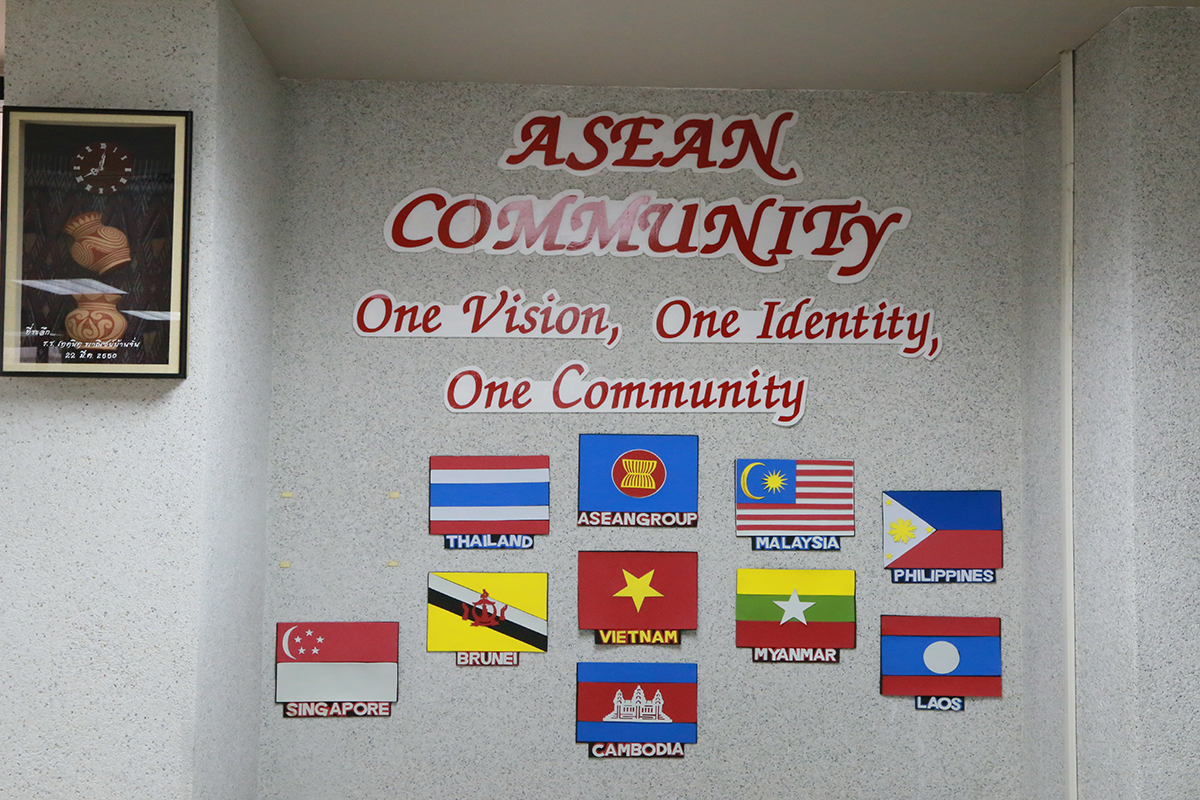
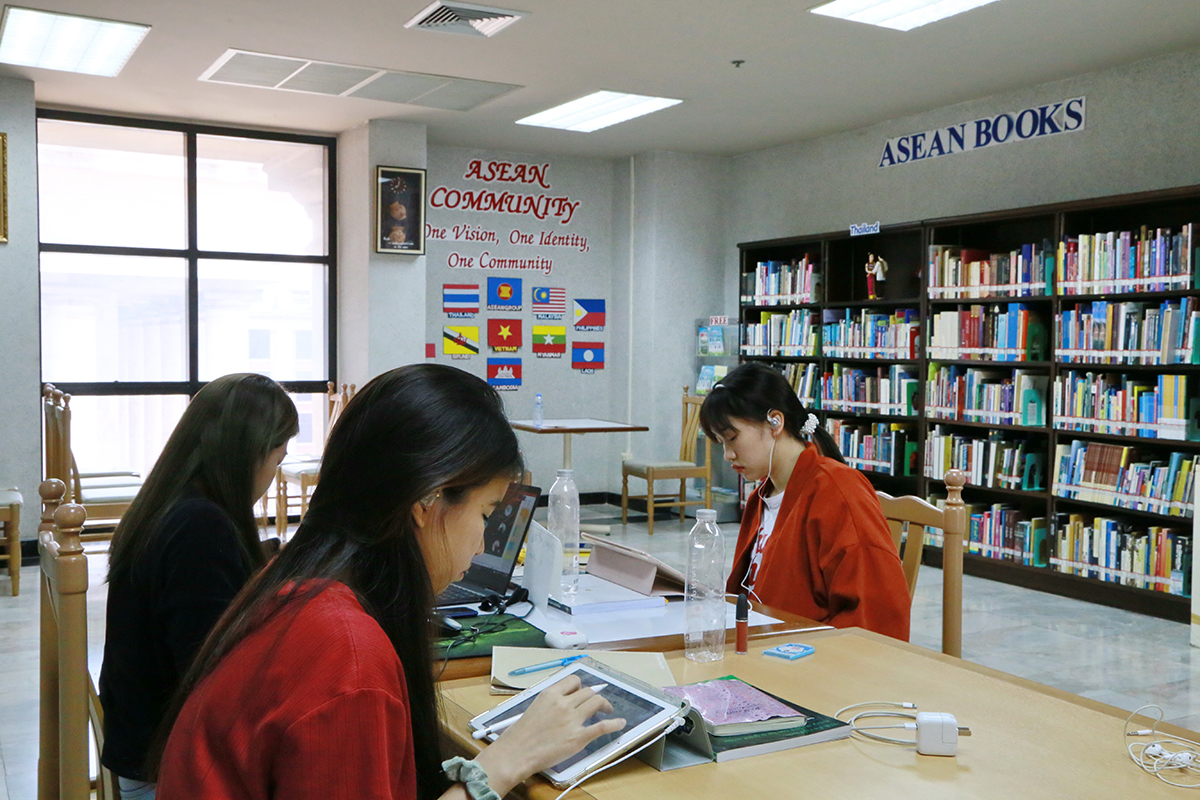
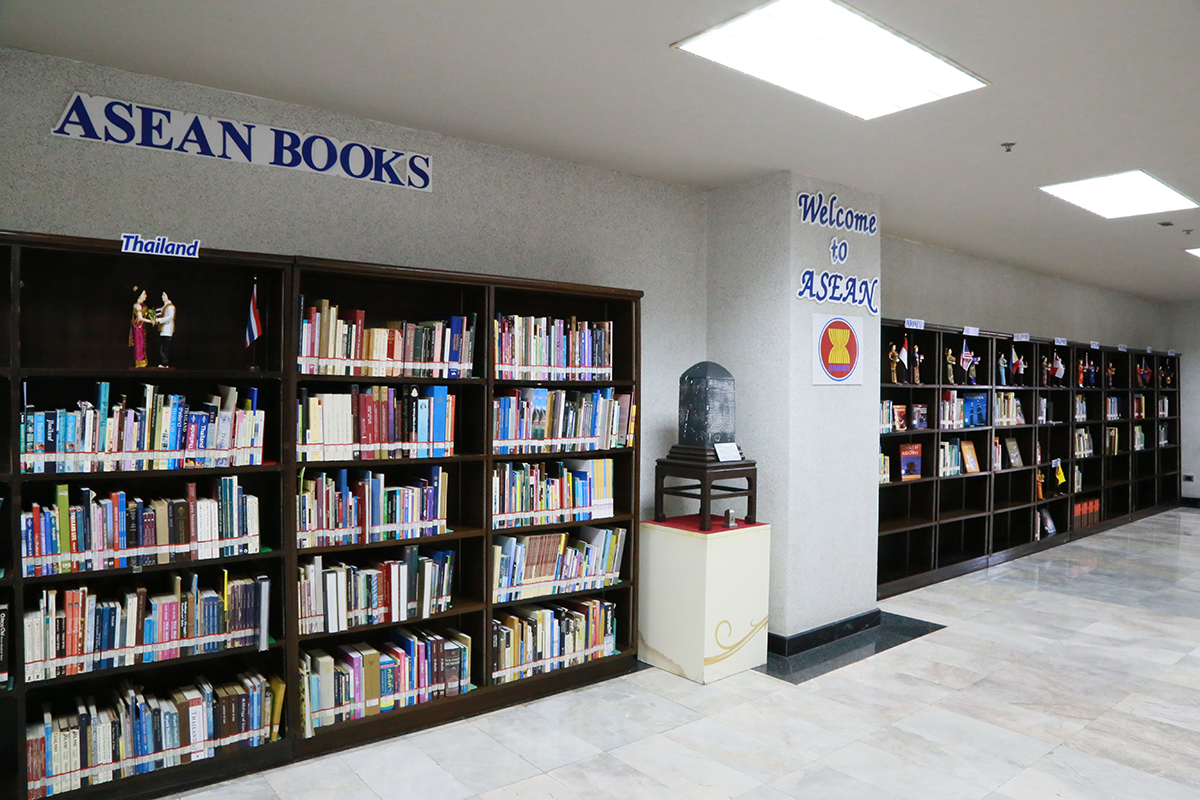
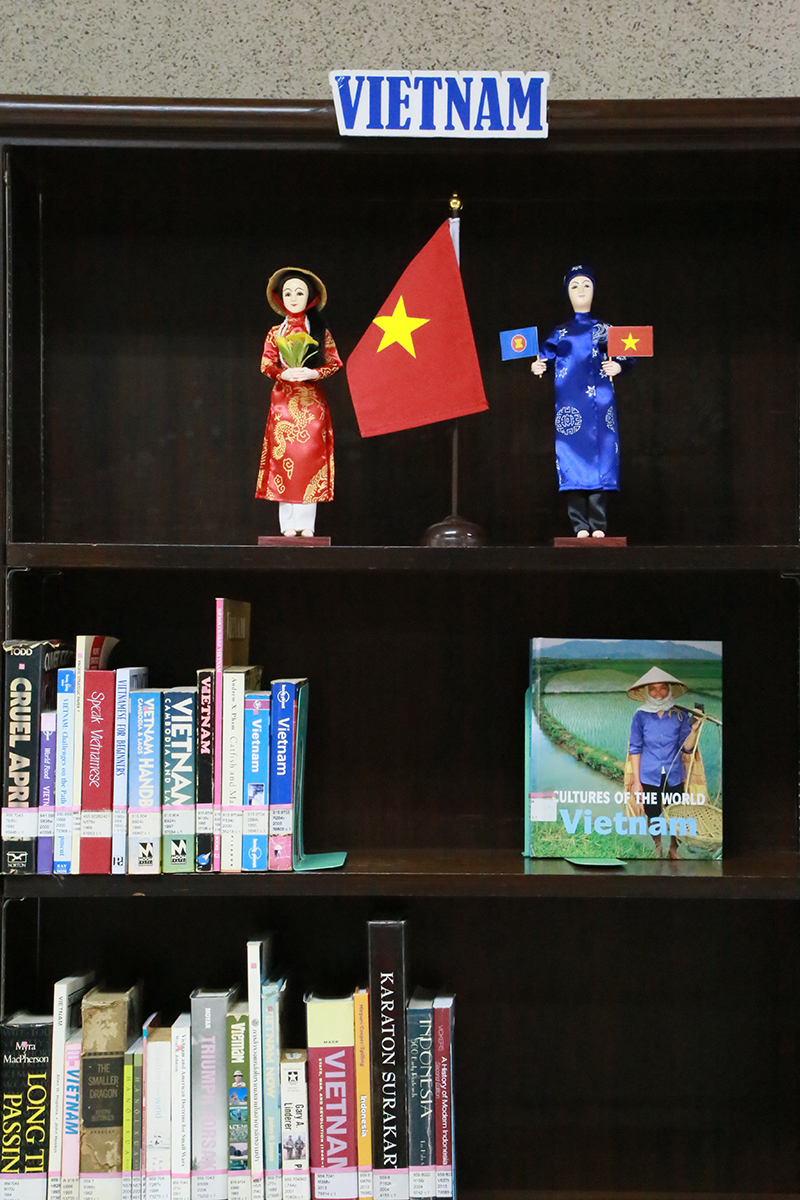
ASEAN Corner is one of the library’s Special Collections. It is a collection that provides books, documents and audio-visual materials to educate about the ASEAN Community, including the national language of each ASEAN member country and its economic, social, cultural, and geographical conditions. Besides, there are also flags and dolls in the national costumes of these ASEAN member countries.
Location: 2nd Floor of The Cathedral of Learning, Suvarnabhumi Campus

About ASEAN

Overview

Establishment

The Association of Southeast Asian Nations, or ASEAN, was established on 8 August 1967 in Bangkok, Thailand, with the signing of the ASEAN Declaration (Bangkok Declaration) by the Founding Fathers of ASEAN, namely Indonesia, Malaysia, Philippines, Singapore and Thailand.

Brunei Darussalam then joined on 7 January 1984, Viet Nam on 28 July 1995, Lao PDR and Myanmar on 23 July 1997, and Cambodia on 30 April 1999, making up what is today the ten Member States of ASEAN.

Fundamental Principles

In their relations with one another, the ASEAN Member States have adopted the following fundamental principles, as contained in the Treaty of Amity and Cooperation in Southeast Asia (TAC) of 1976:

Mutual respect for the independence, sovereignty, equality, territorial integrity, and national identity of all nations;

The right of every State to lead its national existence free from external interference, subversion or coercion;

Non-interference in the internal affairs of one another;

Settlement of differences or disputes by peaceful manner;

Renunciation of the threat or use of force; and

Effective cooperation among themselves.

ASEAN community

The ASEAN Vision 2020, adopted by the ASEAN Leaders on the 30th Anniversary of ASEAN, agreed on a shared vision of ASEAN as a concert of Southeast Asian nations, outward looking, living in peace, stability and prosperity, bonded together in partnership in dynamic development and in a community of caring societies.

At the 9th ASEAN Summit in 2003, the ASEAN Leaders resolved that an ASEAN Community shall be established.

At the 12th ASEAN Summit in January 2007, the Leaders affirmed their strong commitment to accelerate the establishment of an ASEAN Community by 2015 and signed the Cebu Declaration on the Acceleration of the Establishment of an ASEAN Community by 2015.

The ASEAN Community is comprised of three pillars, namely the ASEAN Political-Security Community, ASEAN Economic Community and ASEAN Socio-Cultural Community. Each pillar has its own Blueprint, and, together with the Initiative for ASEAN Integration (IAI) Strategic Framework and IAI Work Plan Phase II (2009-2015), they form the Roadmap for and ASEAN Community 2009-2015.

Please click here for the ASEAN Political-Security Community Video Download Video.

Please click here for the ASEAN Economic Community Video.

Please click here for ASEAN Socio-Cultural Community Video.

Please click here for ASEAN History and Purposes.

ASEAN community

The ASEAN Vision 2020, adopted by the ASEAN Leaders on the 30th Anniversary of ASEAN, agreed on a shared vision of ASEAN as a concert of Southeast Asian nations, outward looking, living in peace, stability and prosperity, bonded together in partnership in dynamic development and in a community of caring societies.

At the 9th ASEAN Summit in 2003, the ASEAN Leaders resolved that an ASEAN Community shall be established.

At the 12th ASEAN Summit in January 2007, the Leaders affirmed their strong commitment to accelerate the establishment of an ASEAN Community by 2015 and signed the Cebu Declaration on the Acceleration of the Establishment of an ASEAN Community by 2015.

The ASEAN Community is comprised of three pillars, namely the ASEAN Political-Security Community, ASEAN Economic Community and ASEAN Socio-Cultural Community. Each pillar has its own Blueprint, and, together with the Initiative for ASEAN Integration (IAI) Strategic Framework and IAI Work Plan Phase II (2009-2015), they form the Roadmap for and ASEAN Community 2009-2015.

Please click here for the ASEAN Political-Security Community Video Download Video.

Please click here for the ASEAN Economic Community Video.

Please click here for ASEAN Socio-Cultural Community Video.

Please click here for ASEAN History and Purposes. 

ASEAN Charter

The ASEAN Charter serves as a firm foundation in achieving the ASEAN Community by providing legal status and institutional framework for ASEAN. It also codifies ASEAN norms, rules and values; sets clear targets for ASEAN; and presents accountability and compliance.

The ASEAN Charter entered into force on 15 December 2008. A gathering of the ASEAN Foreign Ministers was held at the ASEAN Secretariat in Jakarta to mark this very historic occasion for ASEAN.

With the entry into force of the ASEAN Charter, ASEAN will henceforth operate under a new legal framework and establish a number of new organs to boost its community-building process.

In effect, the ASEAN Charter has become a legally binding agreement among the 10 ASEAN Member States. 

     >> Ref: http://www.asean.org/asean/about-asean/overview  

History

The Founding of ASEAN

      On 8 August 1967, five leaders – the Foreign Ministers of Indonesia, Malaysia, the Philippines, Singapore and Thailand – sat down together in the main hall of the Department of Foreign Affairs building in Bangkok, Thailand and signed a document. By virtue of that document, the Association of Southeast Asian Nations (ASEAN) was born. The five Foreign Ministers who signed it – Adam Malik of Indonesia, Narciso R. Ramos of the Philippines, Tun Abdul Razak of Malaysia, S. Rajaratnam of Singapore, and Thanat Khoman of Thailand – would subsequently be hailed as the Founding Fathers of probably the most successful inter-governmental organization in the developing world today. And the document that they signed would be known as the ASEAN Declaration.

      It was a short, simply-worded document containing just five articles. It declared the establishment of an Association for Regional Cooperation among the Countries of Southeast Asia to be known as the Association of Southeast Asian Nations (ASEAN) and spelled out the aims and purposes of that Association. These aims and purposes were about cooperation in the economic, social, cultural, technical, educational and other fields, and in the promotion of regional peace and stability through abiding respect for justice and the rule of law and adherence to the principles of the United Nations Charter. It stipulated that the Association would be open for participation by all States in the Southeast Asian region subscribing to its aims, principles and purposes. It proclaimed ASEAN as representing “the collective will of the nations of Southeast Asia to bind themselves together in friendship and cooperation and, through joint efforts and sacrifices, secure for their peoples and for posterity the blessings of peace, freedom and prosperity.”

          >> Ref: http://www.asean.org/asean/about-asean/history 

ASEAN Name

The Name “ASEAN” refers to the “Association of Southeast Asian Nations”. 

          >> Ref: http://www.asean.org/asean/about-asean/asean-name 

ASEAN Motto

The motto of ASEAN is “One Vision, One Identity, One Community”.

          >> Ref: http://www.asean.org/asean/about-asean/asean-motto

ASEAN Flag

1. The ASEAN Flag is a symbol of Member States’ unity and support for the principles and endeavours of ASEAN and is a means to promote greater ASEAN awareness and solidarity. 

2. The ASEAN Flag represents a stable, peaceful, united and dynamic ASEAN. The colours of the Flag – blue, red, white and yellow – represent the main colours of the flags of all the ASEAN Member States. 

3. The blue represents peace and stability. Red depicts courage and dynamism, white shows purity and yellow symbolises prosperity. 

4. The stalks of padi in the centre of the Emblem represent the dream of ASEAN’s Founding Fathers for an ASEAN comprising all the countries in Southeast Asia, bound together in friendship and solidarity. 

5. The circle represents the unity of ASEAN. 

6. The ASEAN Flag is the reserved copyright of ASEAN. 

7. The specifications of the ASEAN Flag are annexed. 

          >> Ref: http://www.asean.org/asean/about-asean/asean-flag  

ASEAN Emblem

1. The ASEAN Emblem shall be the official emblem of ASEAN.

2. The ASEAN Emblem represents a stable, peaceful, united and dynamic ASEAN. The colours of the Emblem — blue, red, white and    yellow — represent the main colours of the state crests of all the ASEAN Member States.

3. The blue represents peace and stability. Red depicts courage and dynamism, white shows purity and yellow symbolises prosperity.

4. The stalks of padi in the centre of the Emblem represent the dream of ASEAN’s Founding Fathers for an ASEAN comprising all the    countries in Southeast Asia, bound together in friendship and solidarity.

5. The circle represents the unity of ASEAN. 

6. The ASEAN Emblem is the reserved copyright of ASEAN. 

          >> Ref: http://www.asean.org/asean/about-asean/asean-emblem   

ASEAN Declaration

As set out in the ASEAN Declaration, the aims and purposes of ASEAN are: 

1. To accelerate the economic growth, social progress and cultural development in the region through joint endeavours in the spirit of equality and partnership in order to strengthen the foundation for a prosperous and peaceful community of Southeast Asian Nations; 

2. To promote regional peace and stability through abiding respect for justice and the rule of law in the relationship among countries of the region and adherence to the principles of the United Nations Charter; 

3. To promote active collaboration and mutual assistance on matters of common interest in the economic, social, cultural, technical, scientific and administrative fields;

4. To provide assistance to each other in the form of training and research facilities in the educational, professional, technical and administrative spheres;

5. To collaborate more effectively for the greater utilisation of their agriculture and industries, the expansion of their trade, including the study of the problems of international commodity trade, the improvement of their transportation and communications facilities and the raising of the living standards of their peoples;

6. To promote Southeast Asian studies; and

7. To maintain close and beneficial cooperation with existing international and regional organisations with similar aims and purposes, and explore all avenues for even closer cooperation among themselves.

           >> Ref: http://www.asean.org/news/item/the-asean-declaration-bangkok-declaration 

ASEAN Day

8th August is observed as ASEAN Day.  

          >> Ref: http://www.asean.org/asean/about-asean/asean-day  

AU ASEAN Corner: At 2nd floor, The Chathedral of Learning Library, Assumption University, Suvarnabhumi Campus.

ASEAN: Forty‐Five Years of Achievements 

        Since its inception in 1967, the Association of Southeast Asian Nations (ASEAN) has made a number of achievements towards regional peace, stability, and prosperity. Thailand has played an active role in ASEAN from the very beginning Thailand is one of the founding members of ASEAN, together with Indonesia, Malaysia, the Philippines and Singapore. The ASEAN Declaration, or Bangkok Declaration, was signed on 8 August 1967 at Saranrom Palace, Bangkok. As stipulated in the Bangkok Declaration, ASEAN was established with an aim to promote peace and stability, and accelerate economic growth, social progress and cultural development in the region through joint endeavours in a spirit of equality and partnership. Over the years, ASEAN has gradually evolved and expanded to include Brunei Darussalam (1984), Viet Nam (1995), Lao PDR and Myanmar (1997), and Cambodia (1999).

        From a loose association in 1967, ASEAN has transformed into a rules‐based regional organization with the entry into force of the ASEAN Charter in 2008 and earned worldwide recognition as a dynamic regional grouping.

        The peace and stability that the Southeast Asian countries have been enjoying today to a large extent, largely due to ASEAN’s role as a forum that promotes and fosters trust and confidence amongst its Member States. ASEAN has successfully maintained peace, stability and security in the region through the various frameworks and mechanisms, such as Zone of Peace, Freedom and Neutrality (ZOPFAN) (1971), Treaty of Amity and Cooperation in Southeast Asia (TAC) (1976), and Southeast Asian Nuclear‐Weapon‐Free Zone Treaty (SEANWFZ) (1995). To further enhance regional cooperation in political and security issues, the ASEAN Regional Forum (ARF) was established in 1994, which now comprises 27 participating countries including all major regional players. The ARF who serves as a forum for constructive dialogue and consultation to promote confidence‐building and preventive diplomacy in the region.

        On the economic front, ASEAN has made an important milestone in regional economic integration with the conclusion of ASEAN Free Trade Area (AFTA) Agreement in 1992. Since then, ASEAN has continuously pursued closer economic cooperation in trade, services and investment, and moved towards a single market and production base to increase the regional competitiveness. Furthermore, ASEAN Leaders have agreed to start negotiating on the RCEP (Regional Comprehensive Economic Partnership) which will encompass 6 Dialogue Partners, i.e. China, Japan, Republic of Korea, India, Australia and New Zealand.

        ASEAN has also enjoyed functional cooperation in many areas, such as education, disaster management, health, environment, rural development, and science and technology (S&T), to name just a few. Such cooperation has helped increase regional resilience and enabled us to respond effectively to challenges such as pandemics (SARS), natural disasters (2004 tsunami and 2008 Cyclone Nargis), and other transboundary challenges such as haze and drugs.

        With regard to external relations, ASEAN has cultivated close cooperation in numerous fields in the frameworks of ASEAN+1 (with its 10 dialogue partners, i.e. Australia, Canada, China, India, Japan, Republic of Korea, New Zealand, Russia, United States, and European Union), ASEAN+3 and the East Asia Summit (EAS). With the participation of Russia and the United States in 2011, the EAS now includes a number of key global players. Three out of five Permanent Members of the UNSC and eight members of the G20 are now part of the EAS. 

 Thailand’s Contribution to ASEAN 

        ASEAN has been and will continue to be a cornerstone of Thailand’s foreign policy. Thailand attaches great importance to enhancing cooperation within ASEAN frameworks to build trust and confidence among ASEAN Member States, as well as to promote peace, stability and prosperity in the region.

        Thailand’s contribution to ASEAN has been continuous and active. Under our chairmanship in 2008‐2009, the ASEAN Charter entered into force and transformed ASEAN into a truly rules‐ based organization. Thailand is thus fully committed to the effective implementation of the ASEAN Charter, which is vital to the ASEAN community‐building process.

        Another important document adopted during Thailand’s Chairmanship in 2009 is the Roadmap for an ASEAN Community (2009‐2015) which lays down a series of actions to guide our community building efforts in all three pillars, namely the ASEAN Political‐Security Community, the ASEAN Economic Community and the ASEAN Socio‐Cultural Community. Thailand believes that progress in all the three pillars will support a strong ASEAN community building process beyond 2015.

        In the political and security field, Thailand is committed to work with ASEAN Member States to maintain a peaceful and stable regional environment, which is vital for continued economic development and growth in this region. Thailand has been at the forefront of regional efforts in building trust and confidence through the various existing mechanisms and frameworks such as the TAC, the EAS, the ADMM and ADMM Plus, as well as the ARF. We have worked actively with our ASEAN colleagues to promote preventive diplomacy and as certain that all existing dispute settlement mechanisms truly function.

        Thailand has also played an important role in the promotion and protection of human rights in the region, as testified by the establishment of the ASEAN Intergovernmental Commission on Human Rights (AICHR) under our chairmanship in 2009. Thailand has also actively participated and supported the involvement of relevant stakeholders in the region in the drafting process of the ASEAN Human Rights Declaration, which was adopted by ASEAN Leaders at the 21st ASEAN Summit.

        In the economic field, Thailand sees regional economic integration as a means to ensuring sustainable and equitable growth in the region, enhancing competitiveness of ASEAN Member States, and contributing to our integration into the global economy. Thailand has been a strong advocate for ASEAN’s regional economic integration, which has taken shape since the inception of AFTA in 1992. Thailand will continue to play an active role in deepening regional economic cooperation through the development of the RECEP, which will represent the size of half of the global market and help further boost the collective vibrant economic potential in East Asia.

        With 10 countries of ASEAN becoming one community, enhanced connectivity within and beyond our region is vital. Therefore, Thailand proposed the concept of enhanced ASEAN connectivity in a comprehensive manner, comprising physical, institutional and people‐to‐people connectivity. The implementation of the Master Plan on ASEAN Connectivity is one of the top priority areas in ASEAN.

        In the socio‐cultural field, Thailand is a strong proponent of a people‐centred ASEAN Community as envisioned by the ASEAN Charter. Under our chairmanship, Thailand has initiated the ASEAN Leaders’ Meeting with representatives of ASEAN Inter‐Parliamentary Assembly (AIPA), civil society organizations (CSOs) and youth to increase their interaction with ASEAN and promote their involvement in the community‐building process.

        Thailand will also continue to work closely with our ASEAN colleagues to further enhance regional cooperation in various socio‐cultural areas, such as disaster management, education, narrowing development gap, environment, public health, as well as building an ASEAN identity, in order to achieve a caring and sharing society in ASEAN. 

 ASEAN Community by 2015: Challenges and Way Forward 

        Regional integration is at the heart of our ASEAN Community efforts. Thailand sees the emerging ASEAN Community as another important milestone in an evolving process towards closer regional integration.

        The ASEAN Community is envisioned to be a peaceful, stable and prosperous community that can effectively address present and future challenges, play a constructive role in the global community and make meaningful contributions to regional and international peace and security.

        In today’s globalized world with intertwined economic interests and uncertain security environment, a peaceful, stable and prosperous ASEAN Community is both economic and strategic necessity. A strong and successful ASEAN is in the interests of countries both within and outside Southeast Asia.

        ASEAN is a diverse region in terms of geographical locations, political systems, level of economic development, and historical and cultural backgrounds. ASEAN Member States should work to translate the diversity into advantages and opportunities. To achieve this, Thailand believes that it is of vital importance to maintain unity and cohesiveness in ASEAN, and look beyond our national interests for long‐term regional interests. ASEAN also needs to manage its relations with major powers in a balanced, constructive and transparent manner to build trust and confidence. As such, ASEAN will continue to maintain its centrality in the evolving regional architecture.

        Meanwhile, ASEAN should continue its outward looking policy to remain an important pillar of peace and stability, as well as economic growth in the wider East Asia and Asia‐Pacific region.

        ASEAN’s efforts to deepen regional integration and cooperation should aim towards the long‐ term goal of building an integrated East Asian region. ASEAN should utilize the various existing processes such as ASEAN+3 and the EAS to realize the vision of an East Asian community with ASEAN as the driving force. This will promote shared economic interest and contribute to sustainable peace and long‐term stability in the region. 

           >> Ref: http://www.mfa.go.th/asean/ 

AU ASEAN Corner: At 2rd floor, The Chathedral of Learning Library, Assumption University, Suvarnabhumi Campus.